

What can you play offline?
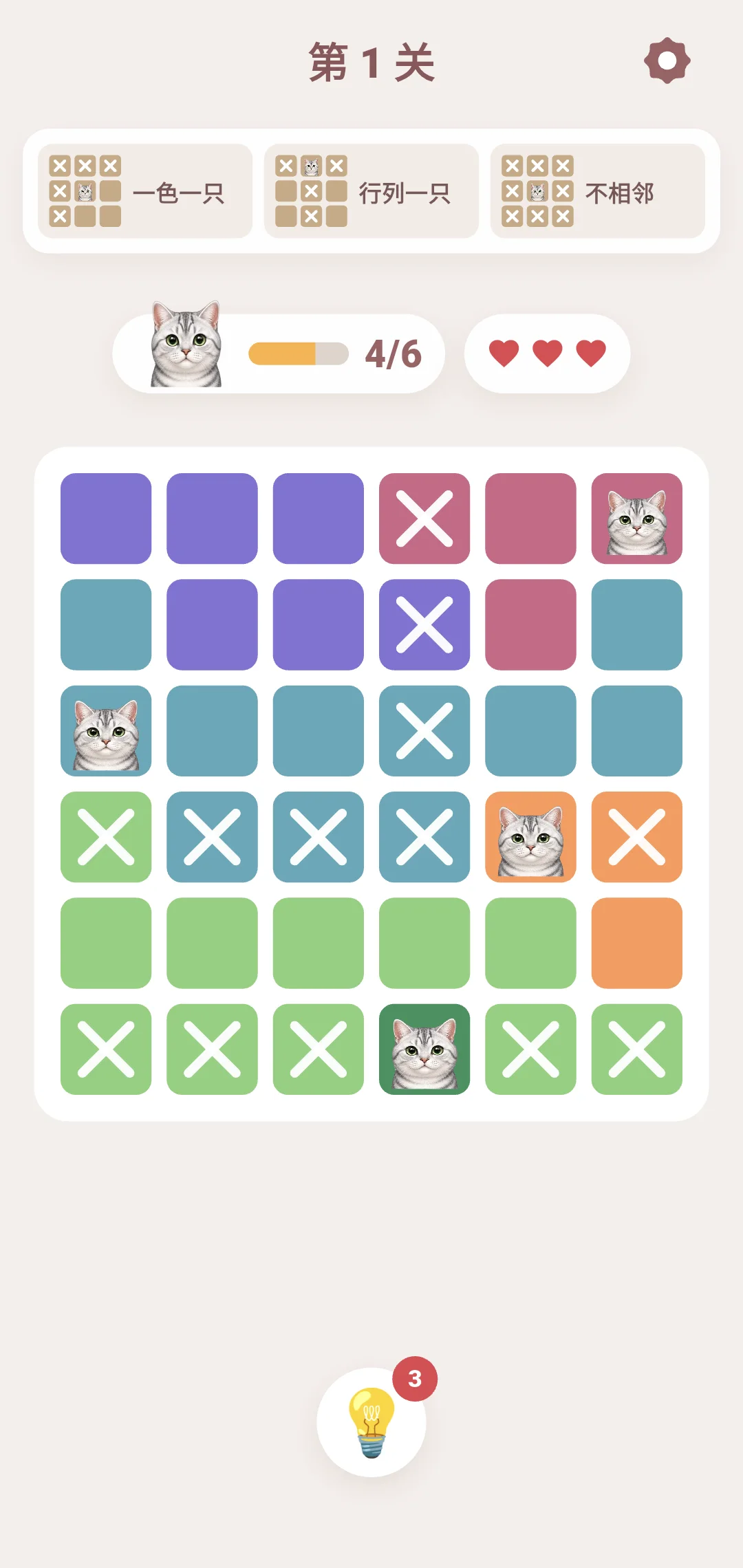
The game includes 2,000 logic levels built from irregular colored regions. In every puzzle, find one pet in each row, each column, and each color while making sure no two pets touch.
That makes PetQuest useful on a commute, flight, trip, or anywhere your connection is unreliable. The levels are not a server-dependent daily puzzle, and you do not have to finish social or management tasks before reaching the grid.
A cat game, but not a match-three game
Silver tabbies, corgis, and other companions give the game its personality: 20 cats and 20 dogs appear in the collection. The actual play is not matching, merging, or idle tapping. Pets are the goal on the board, while observation and elimination move the puzzle forward.
Clearing levels can award activation cards for new companions. The collection adds a reason to keep going, but players who simply want a clean logic session can focus directly on the grid.
Why does it work for a short break?
There are only three rules, so a level starts without a long story or setup. Mark impossible squares, wait for a unique candidate, and uncover the next pet. A wrong choice costs one heart, while a lightbulb hint can reveal a correct square.
The pace rewards thought instead of reflexes. Finish one board in a small pocket of time, or stop and return to the progress stored on your device later.
Which players is it for?
PetQuest fits cat-game fans who want more than decoration, Sudoku and grid-puzzle players who enjoy constraint solving, and Android users looking for a no-Wi-Fi logic game.
If you want competitive multiplayer, constant action, or a long narrative, it is a different kind of experience. PetQuest is closer to carrying a colorful puzzle book—except every solved position reveals a pet.